Enabling the Swarm

A Small, Determined Team is Redefining Electronic Warfare at the Tactical Edge
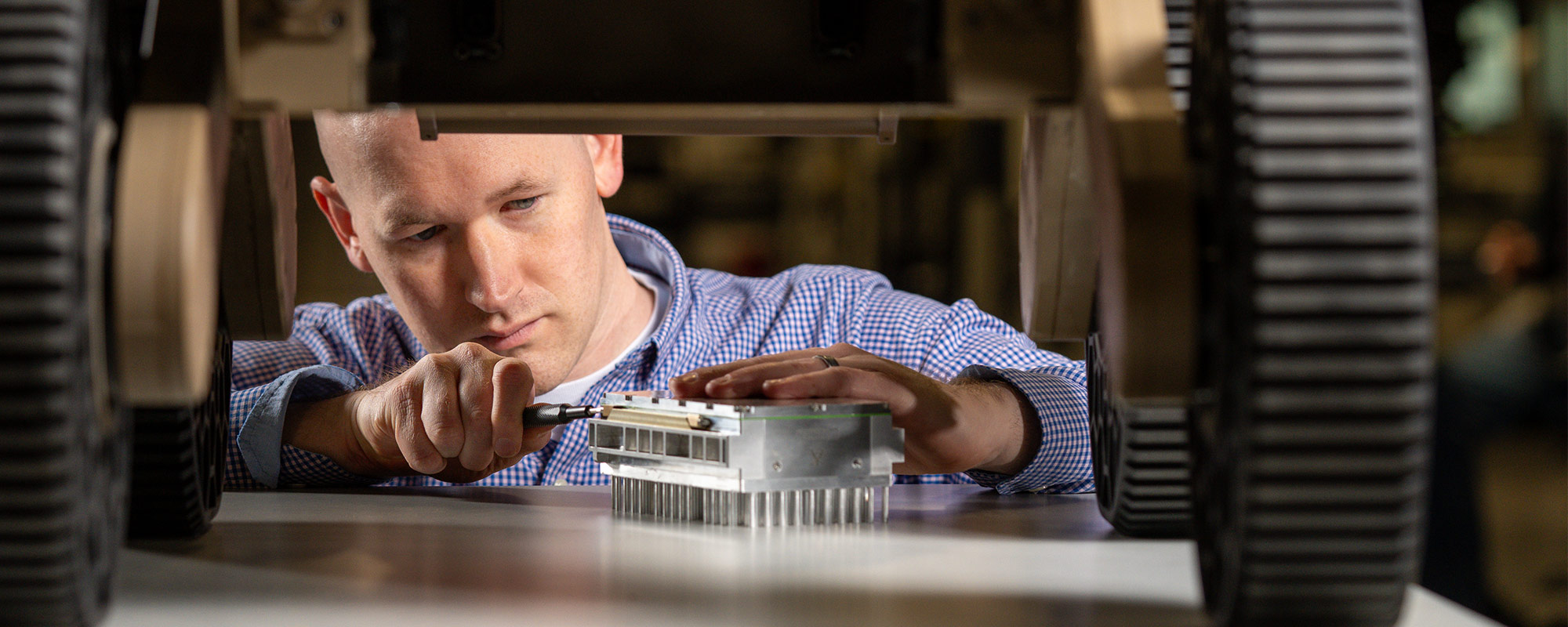
man working on electronics under a drone vehicle

By Ashley Kate Kesler

Big shifts in technology don’t always start big. Smartphones didn’t replace laptops or servers — they made powerful computing smaller and portable. Electronic warfare (EW), use of the electromagnetic spectrum to control the invisible battlefield of signals to detect threats, disrupt adversaries and protect friendly systems, is experiencing a similar transformation. As small, unmanned platforms become more prevalent, the tactical edge — where conditions change fast and decisions are made faster — has grown increasingly hostile in the EW space.

This evolution in modern conflict led to Northrop Grumman’s Tactical Edge Electromagnetic Solution (TEEMS). By adapting proven technologies into a compact, modular payload, TEEMS delivers advanced electronic attack, demonstrating how pocket-sized tech, and its nimble team behind it, can reshape what’s possible at the tactical edge.

Quote
This is an example of how early prototyping and real-world demonstrations can open doors that briefings might not. We’re seeing a major shift toward getting capabilities in the hands of users early, allowing the warfighter to help shape solutions and learn what’s within the art of the possible.
Quote
— Brett Taylor
Tactical Edge Program Manager, Northrop Grumman
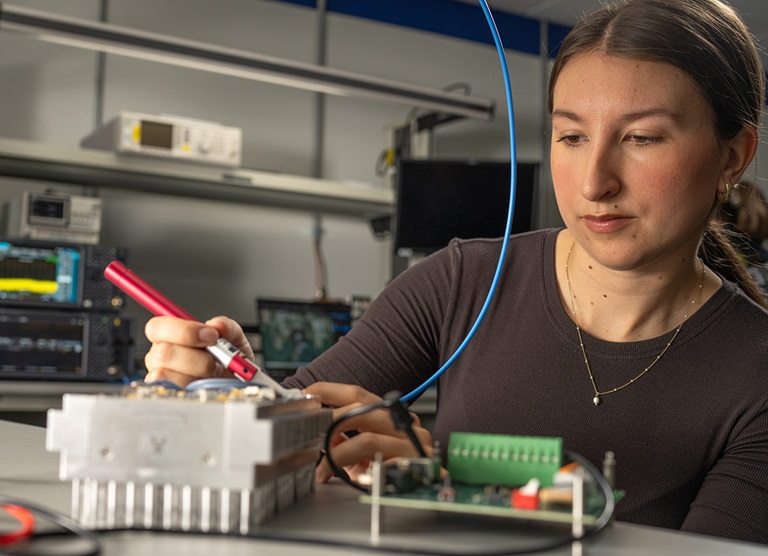
young woman soldering electronics

Reimagining Electronic Warfare

With adversaries increasingly contesting the electromagnetic spectrum, traditional EW — systems often tied to larger aircraft — cannot always reach critical locations.

“The original goal was to take technologies Northrop Grumman had perfected for other domains and bring them to communities that historically didn’t have access,” said Brett Taylor, Tactical Edge program manager.

Radio frequency (RF) is the foundation of EW. Superior RF performance enables faster threat detections, precise response and real-time adaptation in contested environments. As these capabilities shrink in size, weight, power consumption and cost (SWaP-C), EW becomes more mobile, distributed and resilient. 

Throughout the last decade, Northrop Grumman has led industry in advancing SWaP-C reduction and the Tactical Edge team in Warner Robins, Georgia, has worked quickly to adapt these smaller technologies to the realities of modern combat.

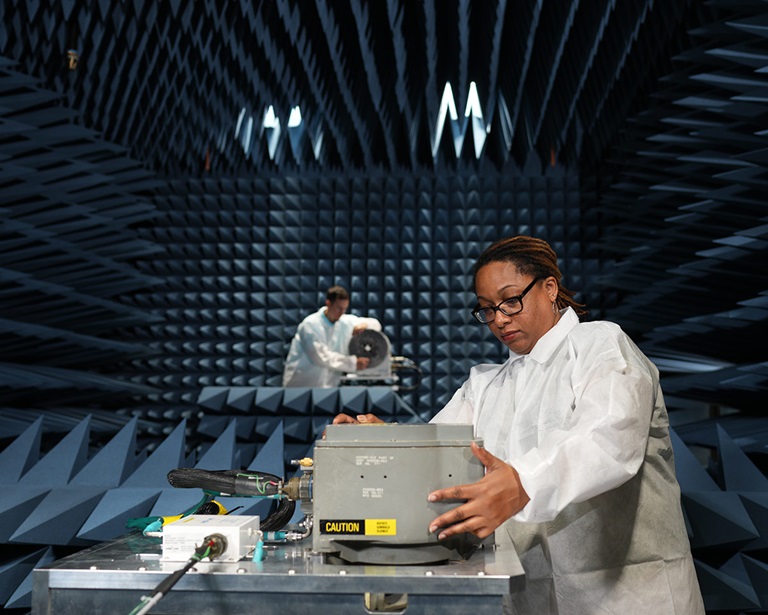
Male and female in the Warner Robins Anechoic Chamber

Leveraging “Rock Ridge,” a custom transceiver that embeds complex EW functionality into a purpose-built chip, the team was able to move away from larger processors by integrating it into their TEEMS device, without sacrificing performance. “Power is the real differentiator,” said David Cooper, lead engineer. “When you’re running on batteries, every watt matters.” 

Power consumption, thermal management and modularity became defining challenges for the team in this adaptation. Early versions evolved through internal experimentation, while engagement with users helped refine not just what the system did, but what it needed to look like.

“Using additive manufacturing tools such as 3D printers, we were able to quickly trial mechanical designs and create fixtures for installations on small, unmanned platforms,” said Brett.

Northrop Grumman’s anechoic chamber, a specially designed room with echo-absorbing material that eliminates outside radio interference, allowed the team to test and improve capabilities against target emitters without initially needing expensive test ranges and assets.

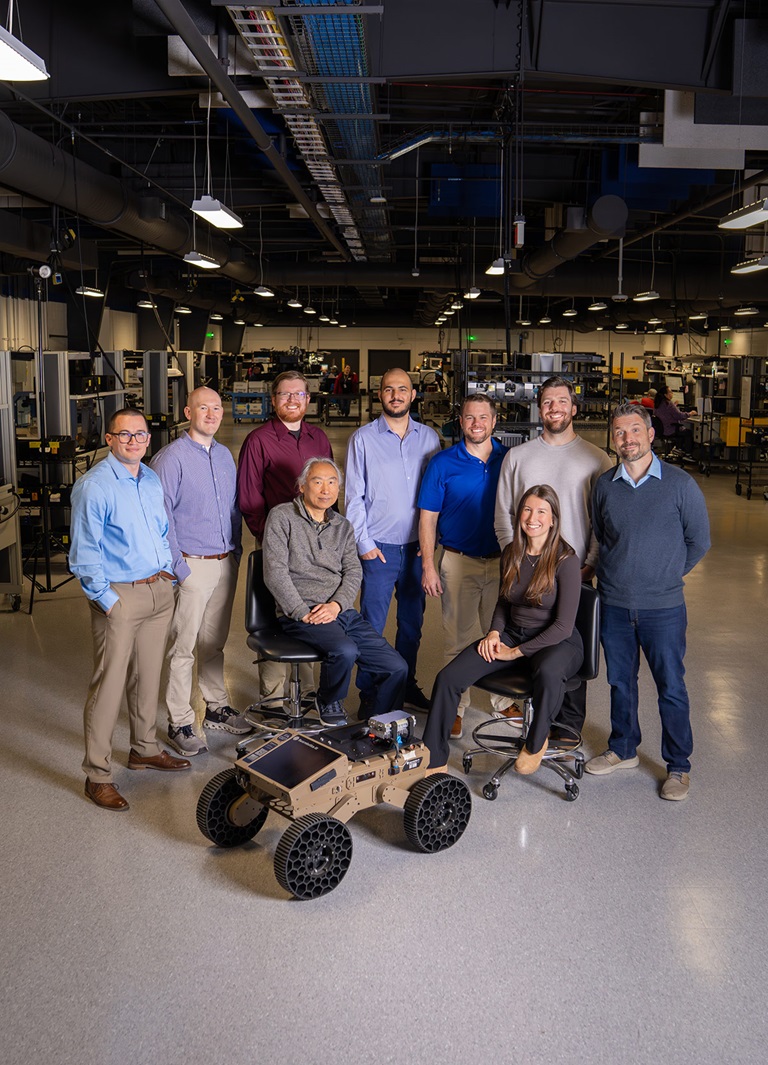
group of workers and drone in large warehouse

From Concept to Swarm

By Silent Swarm 2025, a U.S. Navy test event focused on advanced EW technology for small, unmanned systems, the team had matured TEEMS into a field-demonstratable capability.

“Like our design, we’re a small but powerful team,” said Catalina Castro, an electrical engineer. “It’s exciting to be part of something so impactful.”

On test day, the team gathered near the banks of Lake Huron in Alpena, Michigan, integrating the TEEMS payload onto platforms ranging from tiny robots to unmanned surface vessels and drones.

“Silent Swarm required us to stay extremely fluid,” said Conner Wood, who led testing and integration efforts. “We were constantly adjusting configurations to make everything work together.”

For David, the defining moment came when the team attempted something unplanned — simultaneously jamming three radios spread across a wide frequency range.

“We tried it almost on a whim,” he said. “When it worked, we realized how capable the system really was.”

The team successfully operated multiple unmanned systems from a single location, demonstrating that high-end EW capabilities can be integrated in a compact, modular package.

“It’s one thing to believe you can do it,” said David. “It’s another thing to actually do it in the field.”

Now the team is discussing prototypes and system upgrades that include embedded AI processing. Additional demonstrations — and a potential return to Silent Swarm — are on the horizon.

“This is an example of how early prototyping and real-world demonstrations can open doors that briefings might not,” said Brett. “We’re seeing a major shift toward getting capabilities in the hands of users early, allowing the warfighter to help shape solutions and learn what’s within the art of the possible.”

Summary:

Northrop Grumman’s TEEMS is revolutionizing electronic warfare by delivering compact, power-efficient systems that provide advanced tactical capabilities on small, unmanned platforms in contested environments.

Key Takeaways:

  • Northrop Grumman's TEEMS demonstrates how miniaturization and power efficiency can deliver high-performance electronic warfare capabilities in compact, deployable packages for modern combat challenges.
  • Cross-disciplinary teamwork at Northrop Grumman accelerates the development of cutting-edge, modular EW solutions adaptable to diverse unmanned platforms.

Life at Northrop Grumman

Your work at Northrop Grumman makes a difference. Whether you want to design next-generation aircraft, harness digital technologies or build spacecraft that will return humanity to the moon, you’ll contribute to technology that’s transforming the world. Check out our career opportunities to see how you can help define possible.

A Vision for Modern Manufacturing

A Vision for Modern Manufacturing

Deep Learning for Electronics Inspections
Got Bots

Got Bots

Matt builds full-size robots. He uses them to inspire kids about STEM, an often, they inspire him right back.

Air Superiority

Air Superiority

A fighter pilot's perspective.