Preserving Peace through Strength
By Presley Price
For more than 70 years, the United States has maintained a strategic Nuclear Triad consisting of nuclear-capable bombers, ballistic missile submarines and intercontinental ballistic missiles (ICBMs) that act as strategic deterrents preventing adversaries from engaging in nuclear war and providing a credible threat of retaliation. The Nuclear Triad is the foundation upon which every aspect of U.S. national security rests and is a source of global stability – standing ready, if necessary, to deliver a decisive response, anywhere, anytime.
Each of the three elements or “legs” of the Triad complements the other, providing diverse capability, enhanced survivability and increased flexibility while preventing a single point of failure in the case of an attack.
A Key Piece of the Triad
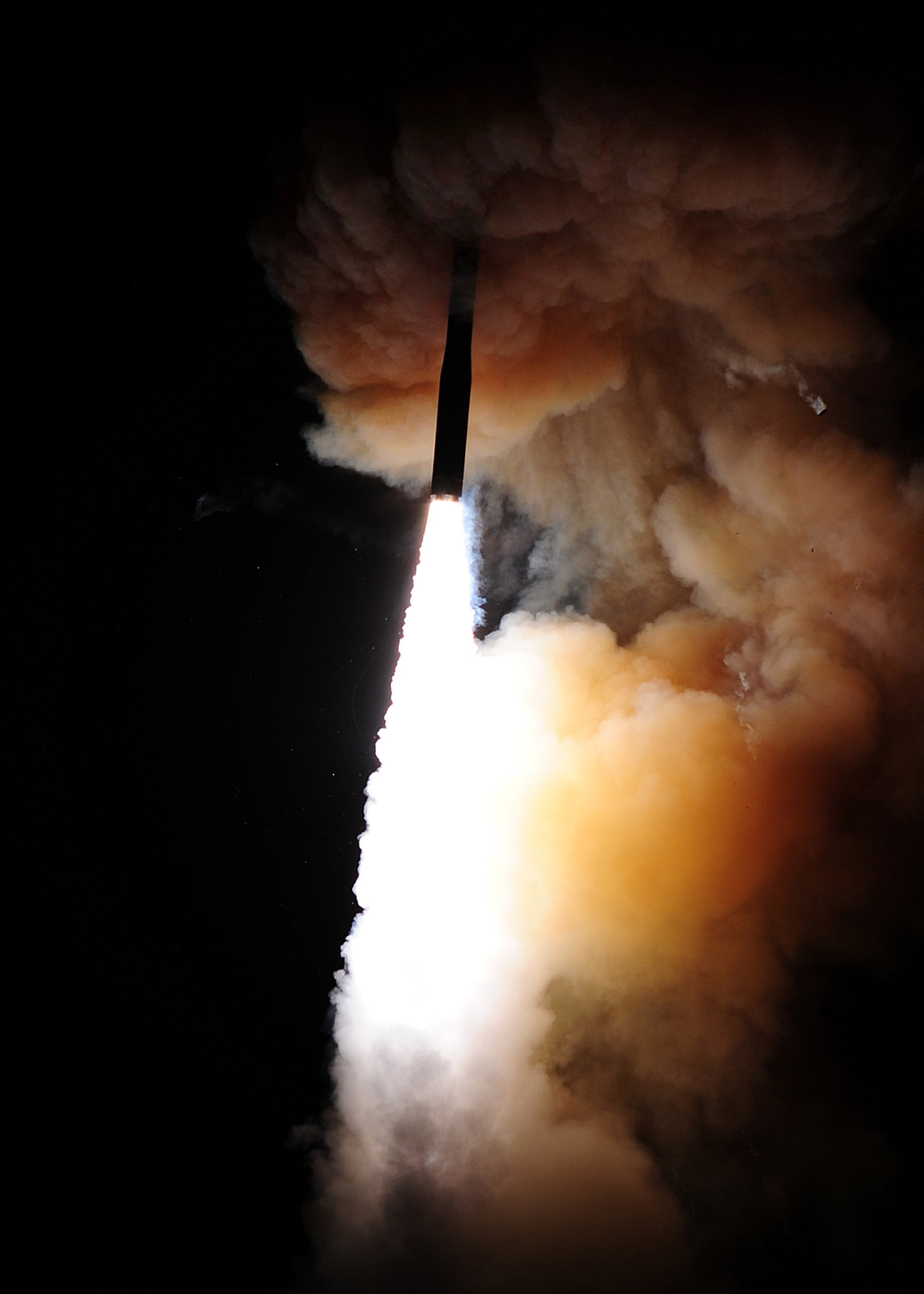
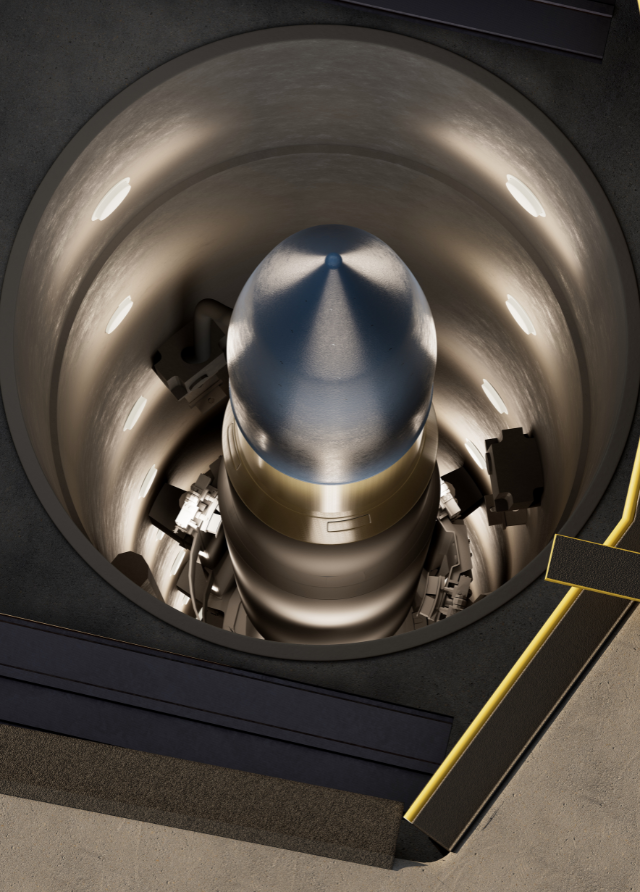
ICBMs make up the land-component backbone of the Triad and are the most responsive leg, having stood around-the-clock alert since 1959. Currently, combat-ready LGM-30G Minuteman III ICBMs remain on-alert in hardened silos across five states. The dispersed placement of ICBM launch facilities and secondary launch platform capability enhances strategic stability and deters conventional or nuclear attacks on the homeland.
Through state-of-the-art improvements, the Minuteman III system has evolved to meet new challenges and assume new missions. Today's Minuteman III reflects nearly 60 years of continuous technological enhancement and remains a capable system as demonstrated in recent flight tests.
Northrop Grumman has been a U.S. Air Force industry partner since the very beginning of ICBM production, manufacturing solid rocket motor stages for Minuteman I, Minuteman II, Minuteman III and Peacekeeper. Today, Northrop Grumman is leading the industry team modernizing the land-based leg of the Triad and delivering more than 450 new ICBMs.

Cornerstone of Modernization
As the threat landscape evolves, nuclear deterrence remains one of the nation’s most critical missions, and modernization of the Triad is one of the top priorities for the Department of Defense. The U.S. Air Force’s LGM-35A Sentinel weapon system is a critical modernization of the ground-based leg, replacing Minuteman III. The new ICBM system is the next evolution of missile and ground infrastructure technology, featuring significant improvements to range, accuracy, maintainability and communications.
Historic in size and scope, Sentinel is more than a missile – it’s a systems-level overhaul of the ground-based strategic deterrent including a vast command and control capability, hundreds of infrastructure projects across thousands of miles and hundreds of maintenance and other support vehicles.
Sentinel is one of the most complex programs the U.S. Air Force has ever undertaken, without a close comparison. While the next-generation weapon system is developed and fielded, Minuteman III ICBMs will need to remain operational and combat ready 24/7 across the transition, a carefully orchestrated process. This entails revitalizing the infrastructure to produce, maintain and operate Sentinel while also continuing to maintain and operate the current system.
Powering Progress
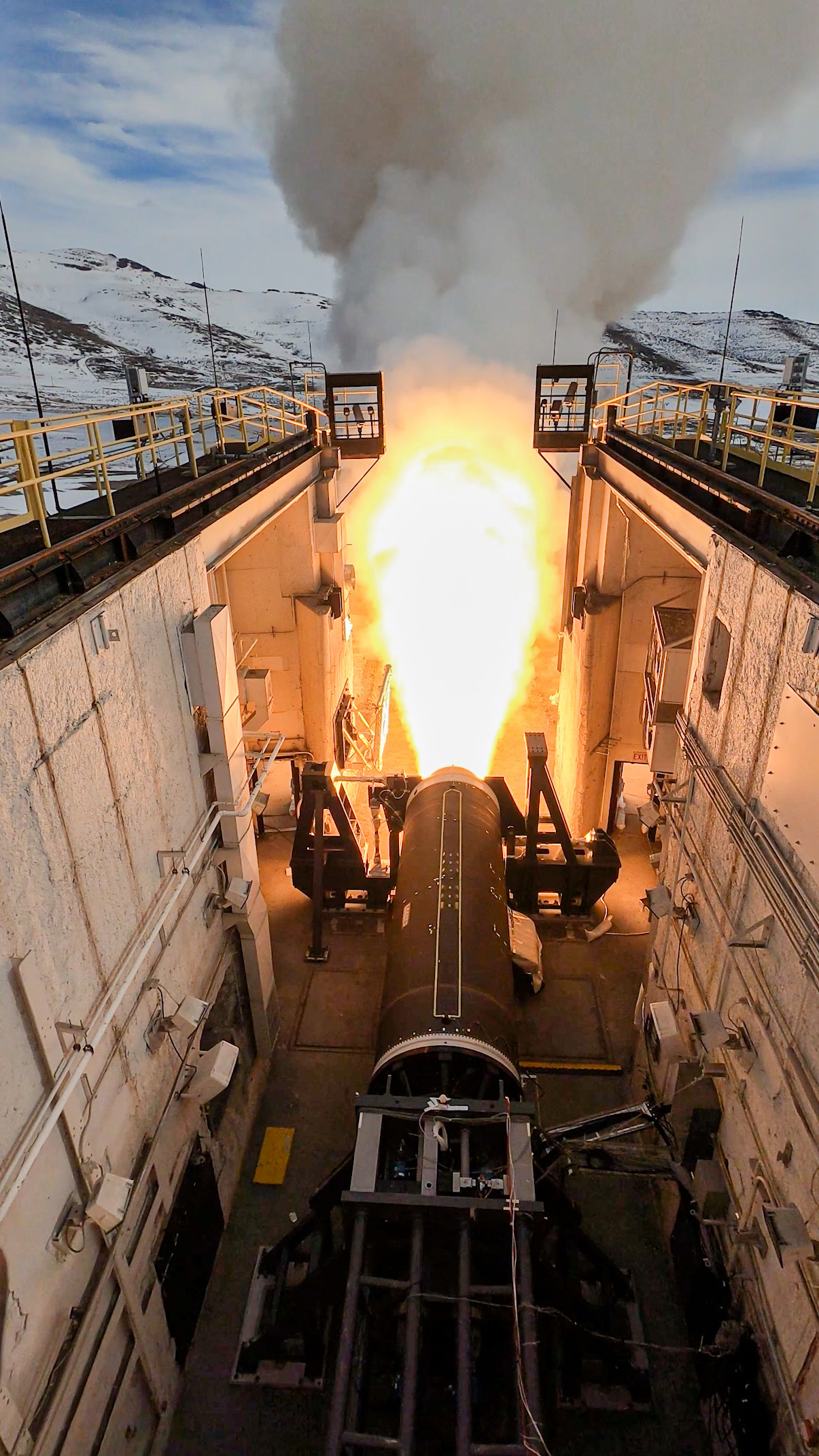
Northrop Grumman is leading a nationwide team of more than 10,000 dedicated professionals across multiple industries – all laser-focused on progressing the Sentinel program with momentum. The company has demonstrated all propulsive elements of the missile and completed testing of other crucial elements, and the industry team has made substantial progress in establishing the supply chain and maturing the infrastructure design and construction approach.
“Northrop Grumman is partnering with the U.S. Air Force to accelerate the Sentinel Milestone B decision by year-end and targeting initial capability in the early 2030s,” said Sarah Willoughby, vice president and general manager of Northrop Grumman Strategic Deterrent Systems. “The Sentinel team is rapidly progressing toward flight tests and production, having recently completed vital missile component qualification tests, risk reduction, digital engineering and prototyping efforts. In addition, Northrop Grumman will continue devising methods to control costs, accelerate deployment, and field the system faster,” she added.
In partnership with the U.S. Air Force, Northrop Grumman continues driving progress to deploy a modern, powerful and adaptable weapon system that will ensure a credible deterrent capability through 2075.