Building on the legacy of the Apollo and Space Shuttle programs, Northrop Grumman is pushing the limits of possible with the Artemis program.
Propelling Artemis II to the Moon
Powering an American Moment
By Rachel Ellis
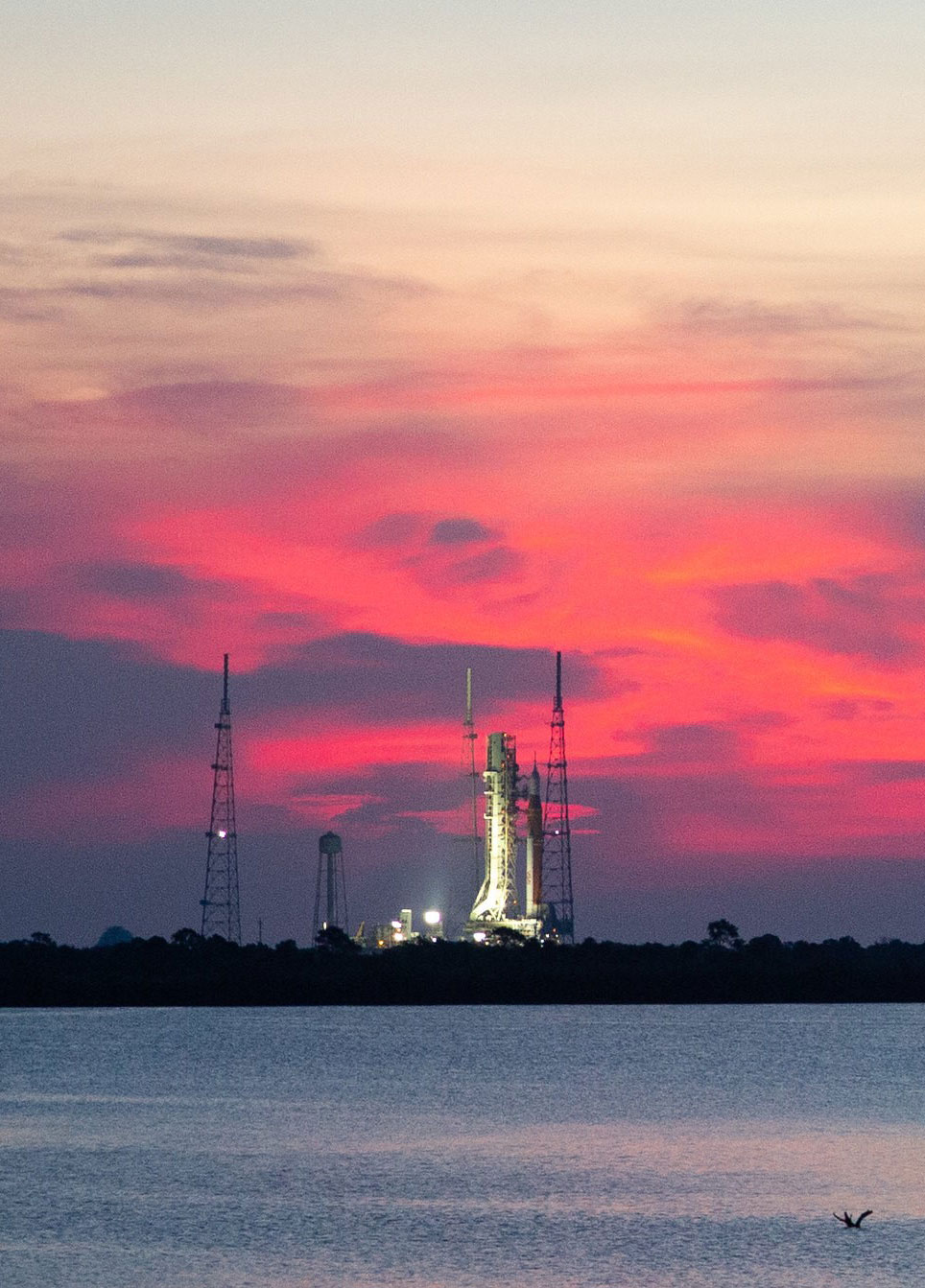
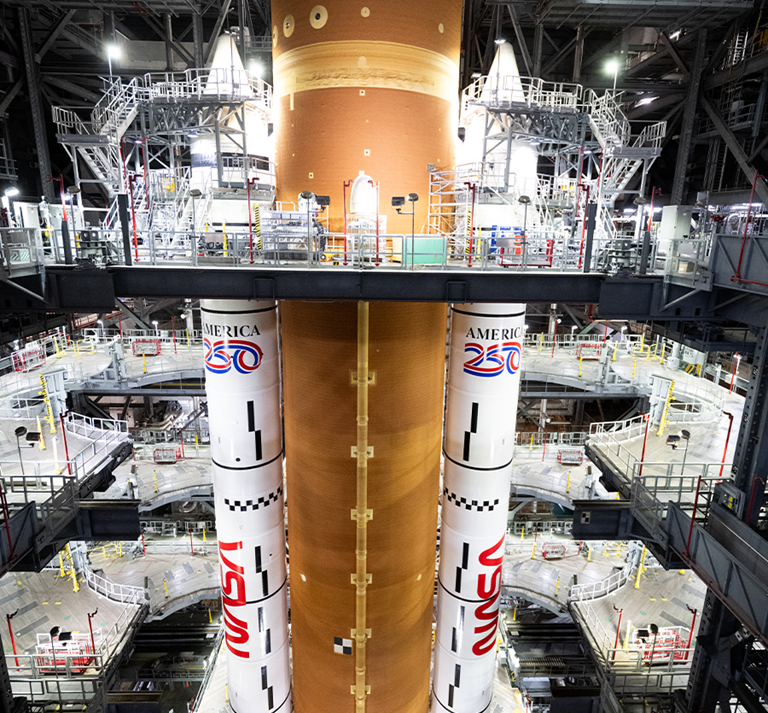
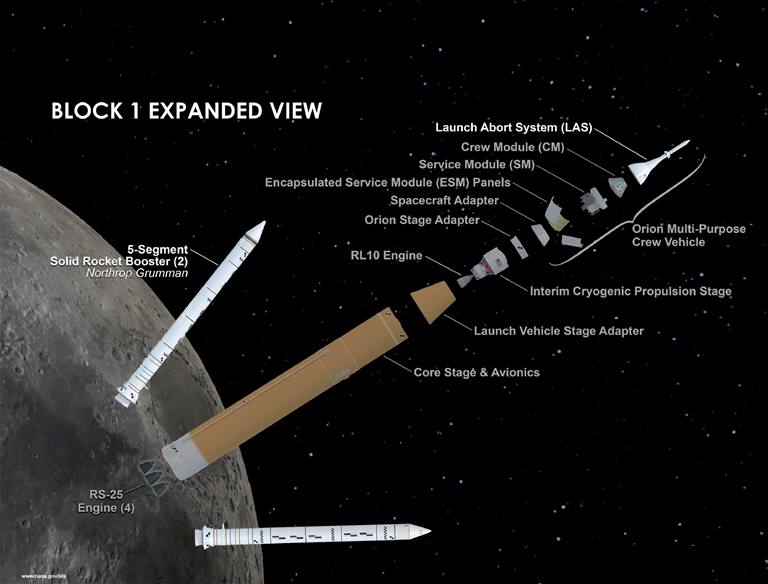
When Artemis II launches from the Kennedy Space Center in Florida, the first Artemis crew will travel out of Earth’s atmosphere and around the moon. The two large, white cylinder-shaped objects bolstered to either side of the rocket — the mission’s twin solid rocket boosters, manufactured by Northrop Grumman — will play an integral role. They provide over 7.2 million pounds of thrust — over 75% of the Space Launch System (SLS) rocket’s total thrust at launch — to help the 322-foot rocket escape Earth’s atmosphere.

Launching Into History
The Artemis II launch comes as America celebrates 250 years of independence. Honoring this defining moment in history, the tops of the twin solid rocket boosters display “America 250” emblems to mark another major milestone in space exploration, including future missions.
“Enabling the exploration of deep space and potential Mars missions is rewarding and motivating for our company at such a pivotal and exciting time in American history,” said Wendy Williams, vice president and general manager of launch and exploration at Northrop Grumman.
The four astronauts aboard Artemis II will mark humanity's return to the lunar vicinity for the first time since Apollo 17 in 1972 and travel farther from Earth than any human in over 50 years. In order to get the rocket to cis-lunar space, powerful propulsion technology that defies Earth’s gravitational pull is critical in achieving the mission.
“As a legacy launch provider, we know the importance of providing reliable and powerful propulsion capabilities for our customers,” said Williams. "Our four-segment booster variant supported over 135 Space Shuttle Program missions, and we altered the design, adding an additional motor segment and more power to enable missions to the Moon.”

Manufacturing Mission Critical Propulsion
Northrop Grumman’s innovations in propulsion are extensive and wide reaching. Having produced more than 1.3 million solid rocket motors (SRMs), the company is a leading provider of the propulsion technology that powers some of the world’s most challenging and vital missions.
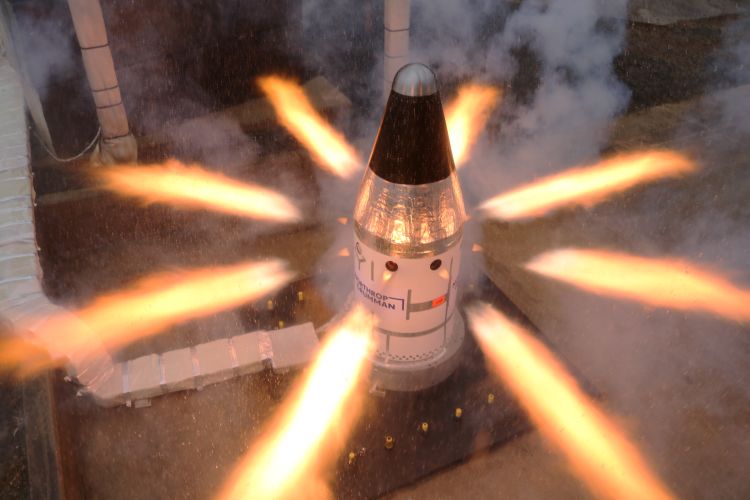
In addition to the 177-foot tall boosters, Northrop Grumman also supplies two SRMs — the attitude control motor (ACM) and abort motor for the Orion spacecraft’s Launch Abort System (LAS), a critical safety system that helps the crew module escape in the event of an emergency on pad or during ascent.
“Whenever we send humans to space, the stakes are much higher,” said Adam Lyons, chief engineer for the LAS abort motor at Northrop Grumman. “We remain dedicated to the precision and adaptability required of our propulsion capabilities to meet the mission needs and keep our astronauts safe.”
Northrop Grumman’s abort motor uses reverse-flow technology that produces 400,000 pounds of thrust and reaches 500 mph in two seconds. This design reduces vibration and acoustic loads for the astronauts on board and lowers structural stress on the Orion spacecraft during a critical phase of space flight. The attitude control motor has up to 7,000 pounds of steering force that is critical to separating the crew from the vehicle, if needed.

Keeping Safety at the Core
The abort motor also includes a safety feature that protects against direct lightning strikes. By providing complete lightning coverage and controlled paths for lightning current in the event of a direct strike, it shields the abort motor from damage and ensures the abort system remains capable of pulling the astronauts to safety in the event of an emergency.
“We are already seeing the lightning strike protection system influence other solid rocket motors the company is manufacturing,” said Adam. “The investments we are making in our propulsion capabilities for Artemis II will inevitably improve mission safety across future space missions.”
Meanwhile, the ACM would steer Orion's LAS and crew module away from the launch vehicle in the event of an early-stage emergency.
“Since the ACM is used on a human-rated system, there were unique requirements,” said Jeffrey Bemis, senior program manager at Northrop Grumman. “While all of our hardware is treated carefully, several motor components required a higher level of qualification, from the smallest of components like bolts and adhesives up to the final assembly.”
Northrop Grumman is propelling the future of space missions with its strong legacy in propulsion technology.
Discover the strength and innovation behind the company’s solid rocket propulsion systems. And read more about the history of the Artemis space program and Northrop Grumman’s ongoing work and partnership with NASA.
Summary
Northrop Grumman powers NASA’s Artemis II mission with twin solid rocket boosters providing over 7.2 million pounds of thrust and critical safety motors, enabling crewed lunar exploration and enhanced astronaut protection during launch.
Key Takeaways
- Northrop Grumman’s solid rocket boosters and abort motors ensure powerful propulsion and crew safety for Artemis II’s lunar mission.
- Northrop Grumman’s unmatched propulsion expertise and scalable production deliver powerful, reliable rocket motors vital for mission success.
Recommended Stories
We mean it when we say anything is possible at Northrop Grumman – and our colleagues are proof of this. With the immense scale and scope of our business, you can shape your career journey with diverse roles and experiences that expand your expertise, feed your curiosity, and fuel your passion.
We are proud to share the stories of our colleagues to inspire future generations.